


What if your period pad could quietly gather health information while you go about your day? This is the future of menstrual blood health screening. No needles, no lab visits, no hassle—just you, your period, and a breakthrough that turns something as routine as your monthly cycle into a tool for real-time health insight.
This isn’t science fiction. It’s a real innovation called MenstruAI, and it could completely change how we understand and manage women’s health.
A New Kind of Pad with a Big Purpose
Researchers at ETH Zurich have created something that might sound simple at first glance but carries a huge impact: a menstrual pad that doubles as a health screening tool. It’s designed to detect biological markers in menstrual blood that could point to conditions like chronic inflammation, certain cancers, or endometriosis.
To understand how meaningful this is, we need to recognize what menstrual blood truly is. It’s not just waste. It’s filled with information about what’s happening inside the body. In fact, menstrual blood contains hundreds of proteins and clinically relevant biomarkers, many of which mirror those in venous blood making it a promising medium for menstrual blood health screening.
How It Works
MenstruAI combines a familiar product—a menstrual pad—with cutting-edge technology. Here’s the basic breakdown of how it works:
- A small, flexible test strip is tucked into the pad and lined with special antibodies that react to specific biological markers.
- As menstrual blood collects, it naturally flows into this test area.
- If certain markers are present—like C-reactive protein (linked to inflammation), CEA (linked to cancer), or CA‑125 (linked to endometriosis)—they’ll cause a visible color change on the strip.
- You take a photo with your smartphone, and an app analyzes the results.
This offers a private, non-invasive, and cost-effective way to screen for serious health conditions using a process most of us already go through every month.
Why This Matters
For women, especially those between 25 and 50, this is about more than convenience.It’s about reclaiming control over health in a way that really fits life. In fact some women deal with severe menstrual symptoms, that can even prohibit them from enjoying both a personal and professional life.
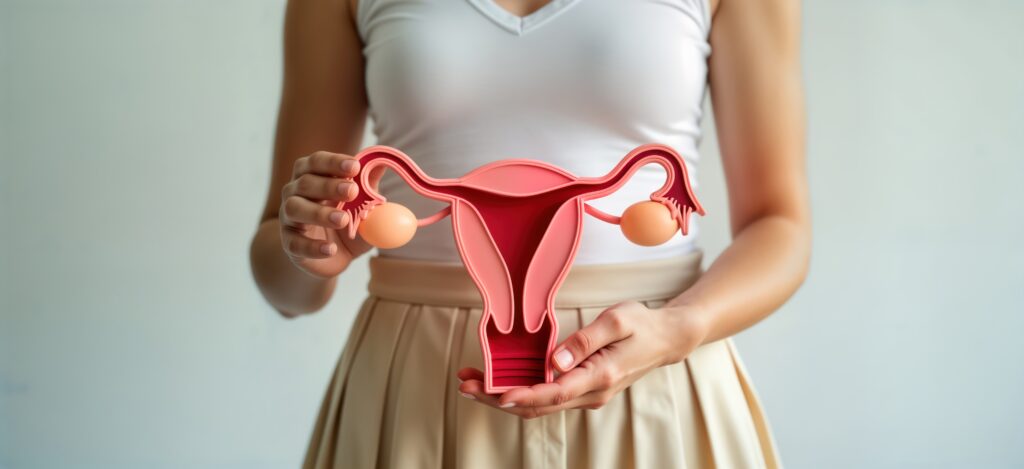
Think about how many times you’ve skipped a blood test or delayed going to the doctor because of time, cost, or not feeling like it was urgent. Three in 4 women are skipping a routine appointment and putting themselves at higher risk for cancer. And one in three women in the U.S. report skipping health appointments each year due to barriers like cost, overwhelm, or scheduling stress. Menstrual blood health screening offers a new path forward. It gives women insight without needing to take time off work, schedule a doctor’s appointment, or pay for out-of-pocket lab fees.
And there’s another layer here that’s personal. For too long, menstruation has been stigmatized or treated as something to hide. This innovation turns it into something valuable. Something that can help us catch problems early, monitor changes over time, and have more informed conversations with our healthcare providers.
Menstrual Blood as a Health Mirror
Here’s what most people don’t realize: menstrual blood contains many of the same biomarkers as venous blood, meaning the stuff you’d typically have to draw from your arm. It holds information about:
- Hormone levels
- Inflammatory responses
- Tumor markers
- Immune system activity
The research team at ETH Zurich is focusing on markers that are already well-known in medical practice. These include:
- CRP (C-reactive protein): A sign of inflammation, which can be tied to everything from infections to chronic diseases.
- CEA (carcinoembryonic antigen): Often elevated in cases of certain cancers.
- CA-125: Commonly used to screen for ovarian cancer and diagnose endometriosis.
This rich biological data is what makes menstrual blood health screening a revolutionary new approach to routine, accessible health insight.
What the Research Is Showing
Early tests have been promising. Women who tried the prototype reported that it was just as comfortable as a regular pad. The color-changing strips worked, and the app was able to analyze the results with surprising accuracy. It’s still in the testing phase, and larger studies are underway to validate the technology on a broader scale, but this is a promising start.
What stands out is that the device doesn’t rely on electricity, Wi-Fi, or anything complex. That means it could eventually be used in low-resource communities or places where access to healthcare is limited.
Why This Could Be a Game-Changer
Let’s zoom out for a second. Here’s what this could mean for everyday women:
- Early detection becomes routine. No more waiting until symptoms force you into the doctor’s office. Subtle changes could be caught in your bathroom.
- Monthly tracking gets smarter. MenstruAI adds medical insight to cycle tracking apps.
- Healthcare becomes more accessible. For women in underserved areas or with limited access to specialists, this could offer peace of mind and direction.
- Stigma is challenged. The more we talk about menstrual blood as something medically important, the less shame we attach to it.
But Let’s Be Clear—This Isn’t a Diagnosis
It’s important to remember that MenstruAI is a screening tool. It’s not here to give you a diagnosis. Like a home blood pressure monitor or glucose test, menstrual blood health screening is a signal—not a conclusion. But that signal could make all the difference in when and how you seek care.der.
In a way, it’s like che cking your blood pressure or blood sugar at home. It’s another tool in your toolkit, one that helps you stay informed and advocate for yourself.
Potential Challenges
Of course, no innovation comes without its hurdles. Here are a few things the team is still working on:
- Biological variation: Everyone’s normal levels are a little different. The goal is to create a baseline so the app can personalize your results over time.
- Regulatory approval: Before this hits the market, it’ll need to go through rigorous testing to ensure safety and accuracy.
- Design and comfort: The strip must stay secure and functional without changing how the pad feels or works.
- Cultural stigma: There’s still work to be done in making menstrual health more accepted and talked about—especially when it comes to using menstrual blood for diagnostics.
The researchers are already working with design teams to ensure the product feels familiar and comfortable, so it doesn’t cause discomfort or self-consciousness.
A Personal Note from a Healthcare Provider
As a nurse practitioner with years in emergency, critical, and community care, I’ve seen the consequences when women delay seeking help—not from lack of caring, but simply because life is hectic.
Women experience 25% more time in poor health than men, often due to delay in care—something I’ve witnessed first-hand
That’s why the idea of a pad that doubles as a health checkpoint matters so much. It’s about meeting women where they are with solutions built into everyday routines.
What Comes Next
MenstruAI is still being tested in a larger group of users, but the hope is that within the next few years, it will become available to consumers. The potential is big, and the vision is clear: use what we already go through each month to help us live longer, healthier lives.
In the future, these pads might screen for even more conditions, from fertility indicators to chronic illnesses. Imagine being able to monitor your health every month without adding another appointment to your calendar.
In the Meantime, Here’s What You Can Do

- Keep tracking your cycles. Apps like Clue, Flo, and others can help you notice patterns.
- Pay attention to changes—pain, bleeding, mood, fatigue. If something feels off, don’t ignore it.
- Stay informed. The more you know about health tech and innovations like MenstruAI, the more prepared you’ll be to make informed decisions when new tools become available.
And if you’re someone who’s struggled with painful periods, irregular bleeding, or chronic fatigue that no one seems to take seriously, know that you’re not alone—and the tools to help are evolving.
What Auntie Flow Has Been Trying to Tell Us
Every month, our bodies hand us a report card, wrapped in cramps and cravings. But what if we treated it as a health signal rather than a nuisance? Technology like MenstruAI shows us that even the parts of womanhood we’re told to hide can hold power. So next time Auntie Flow shows up, give her your full attention—it could be the first step toward better health.
Menstrual blood isn’t something to hide. It’s something to understand. With technology like MenstruAI, we’re beginning to rewrite the story of how women care for themselves.